
The Ultimate Pet Shears Guide: A Comprehensive Resource for Professional Groomers
Upload time :January 15, 2025
Shares
Reads
- Introduction
- Understanding the Importance of Quality Shears
- Types of Pet Grooming Shears
- Straight Shears
- Curved Shears
- Thinning Shears
- Edge Types: The Key to Precision
- Beveled/Serrated Edge
- Hollow Ground/Convex/Honed Edge
- Handle Types: Ergonomics and Comfort
- Opposing Grip
- Offset
- Swivel Thumb
- Shank Types and Their Impact
- Short Shank
- Bent Shank
- Material Matters: Choosing the Right Shear Material
- Carbon Steel
- Stainless Steel
- Frozen/Ice/Cryogenic Tempered Steel
- Understanding Shear Length and Rockwell Hardness Rating
- Expert Tips for Selecting and Maintaining Shears
- Frequently Asked Questions (FAQs)
- Interactive Quiz: Test Your Shear Knowledge
- Conclusion
- Emma, NCMG: "Shears are very personal. Find the length and style that feel most comfortable to you."
- Lucas, NCMG: "Regularly check the tension of your shears. Too loose, and they won't cut well; too tight, and you'll wear them out faster."
- Tension Adjustment: Use the tension dial carefully. Over-tightening can cause grinding, while too loose can lead to nicks.
- Cleaning and Oiling: Clean your shears after each use and oil them regularly to prevent rust and maintain smooth operation.
- Sharpening: Have your shears professionally sharpened regularly to keep them in top condition.
- What is the primary use of thinning shears?
- A) Setting patterns
- B) Blending clipper lines
- C) Cutting through thick coats
- Which handle type is designed to reduce hand fatigue?
- A) Opposing Grip
- B) Offset
- C) Swivel Thumb
- What does a higher Rockwell Hardness Rating indicate?
- A) Better edge retention
- B) More flexibility
- C) Easier to sharpen
Table of Contents
Introduction
In the world of professional pet grooming, the right tools can make all the difference. Among these tools, shears hold a special place as they directly influence the quality and efficiency of your grooming work. Whether you're shaping a poodle's intricate cut or blending the coat of a golden retriever, your choice of shears will impact your results. This comprehensive guide aims to provide pet groomers with an in-depth understanding of pet shears, from types and materials to expert tips on selection and maintenance. With insights from experienced groomers and interactive elements, this guide is designed to enhance your grooming expertise and elevate your craft.
Understanding the Importance of Quality Shears
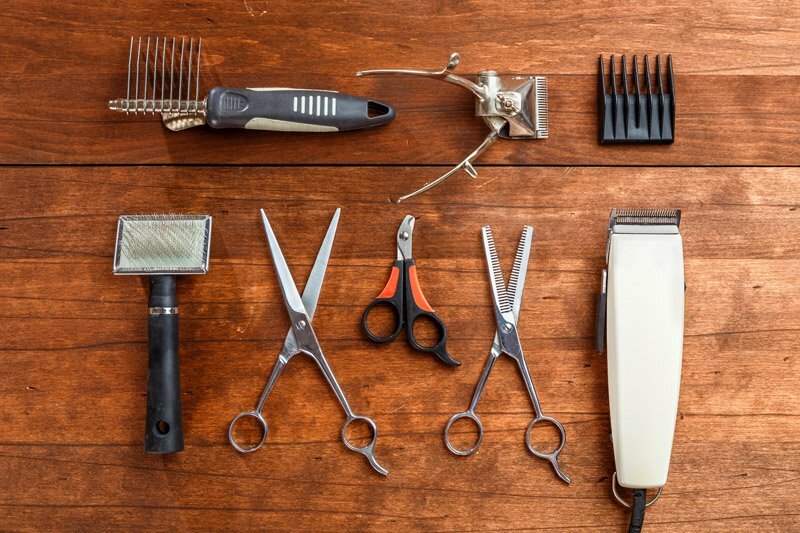
Selecting the right shears is critical for any groomer. Not only do they affect the speed and quality of your work, but they also have a significant impact on the health of your hands and your overall grooming business. High-quality shears can reduce hand fatigue, improve cutting precision, and ultimately lead to better grooming outcomes. Investing in the right shears is an investment in your career as a professional groomer.
Types of Pet Grooming Shears
Straight Shears
Purpose: Straight shears are the workhorses of the grooming world. They are used for setting patterns, shaping, and finishing work. Their versatility makes them a staple in every groomer's toolkit.
Best For: All coat types, especially when precise, straight cuts are needed.
Tip: Choose a length that feels comfortable in your hand and suits the size of the dog you're grooming.
Curved Shears
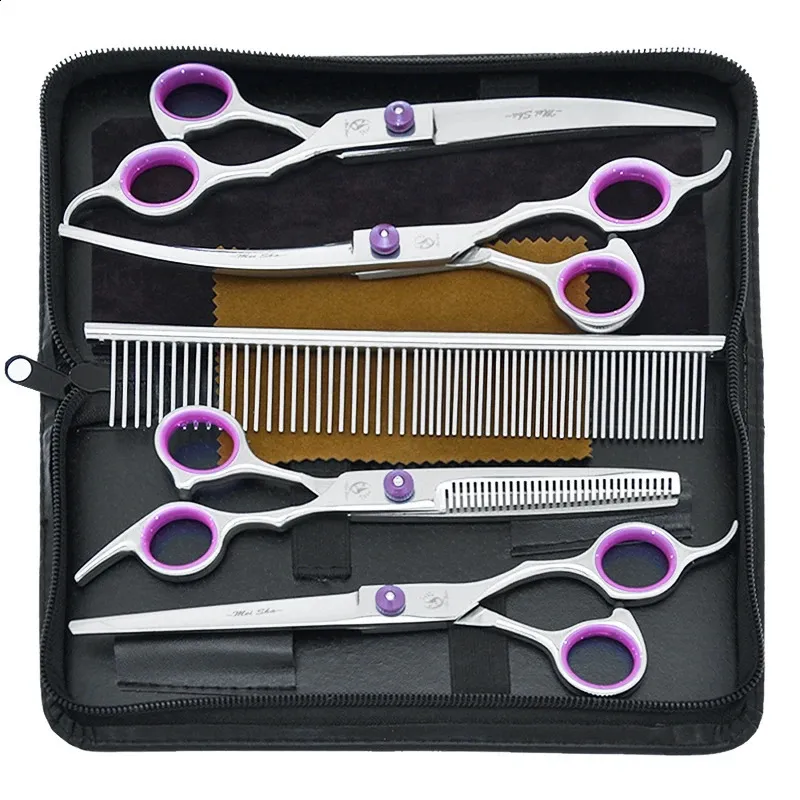
Purpose: Curved shears are designed to fine-tune shaping and set angulation for specific areas, such as around the face, paws, and tail. The curve allows for a more natural and rounded finish.
Best For: Breeds with rounded cuts, like Bichon Frises and Poodles.
Tip: Larger curved shears have a more gradual curve, making them suitable for larger dogs.
Thinning Shears
Purpose: Thinning shears have a cutting edge on one blade and teeth on the other. They are used to give a groom a more natural look and to blend out or "erase" harsh clipper lines.
Best For: Creating a soft, blended finish on any coat type.
Tip: Double thinners, which have teeth on both blades, offer even more subtle blending.
Edge Types: The Key to Precision
Beveled/Serrated Edge
Features: These shears have tiny grooves or serrations ground into the edge of one blade. This design holds the hair in place, increasing efficiency while grooming.
Benefits: Ideal for cutting through thicker coats and providing a steady grip on the hair.
Tip: Great for beginners due to their forgiving nature.
Hollow Ground/Convex/Honed Edge
Features: These shears have a ground-down inside that reduces weight and gives the blade a sharper edge for smoother and more precise cutting.
Benefits: Offers a superior cut and is ideal for finishing work.
Tip: Requires regular maintenance and sharpening to maintain their edge.
Handle Types: Ergonomics and Comfort
Opposing Grip
Design: The standard design with symmetrical finger holes, suitable for groomers who prefer to hold their shears with their middle finger and thumb.
Benefits: Familiar and straightforward, often preferred by traditionalists.
Tip: Ensure a comfortable fit to avoid hand fatigue.
Offset
Design: Features an ergonomic design with an offset handle to reduce hand fatigue. Designed for groomers who prefer to hold their shears with their ring finger and thumb.
Benefits: Reduces strain on the hand and wrist, making it ideal for long grooming sessions.
Tip: Try different offsets to find the most comfortable fit for your hand.
Swivel Thumb
Design: The thumb ring is free-moving and follows the motion of the groomer's hand while scissoring.
Benefits: Offers maximum flexibility and reduces hand strain.
Tip: Takes some getting used to but can significantly improve comfort and control.
Shank Types and Their Impact
Short Shank
Features: Shorter distance from the finger holes to the balance/pivot point, allowing the blades to open wider with less hand movement.
Benefits: Provides greater control and precision.
Tip: Ideal for detailed work and smaller breeds.
Bent Shank
Features: The shank from the balance/pivot point to the finger holes has a slight upward angle.
Benefits: Allows for easier grooming without flattening the coat.
Tip: Great for maintaining natural coat texture.
Material Matters: Choosing the Right Shear Material
Carbon Steel
Composition: An alloy of hardened steel made from iron and carbon.
Benefits: Durable and holds a sharp edge well, but requires regular maintenance to prevent rust.
Tip: Always keep dry and oiled to maintain performance.
Stainless Steel
Composition: An alloy of hardened steel with at least 10.5% chromium for rust and corrosion resistance.Grades: Varies from 440A (Good) to 440C (Better) and VG-10 (similar to 440C but stronger).
Benefits: Long-lasting and low maintenance, making it a popular choice.
Tip: Choose a grade that balances performance with budget.
Frozen/Ice/Cryogenic Tempered Steel
Process: Subjected to temperatures below zero (down to -300°F) for optimum hardness and edge longevity.
Benefits: Offers a longer-lasting cutting edge.
Tip: Ideal for groomers who require durable, long-lasting shears.
Understanding Shear Length and Rockwell Hardness Rating
Shear Length
Measurement: Shears are measured from the tip of the tang (finger rest) to the tip of the blades.
Consideration: Choose a length that suits your hand size and the breeds you groom.
Tip: Longer shears offer more coverage, while shorter shears provide more control.
Rockwell Hardness Rating
Scale: Measures the hardness of the metal used in shears.
Implication: Higher ratings indicate better edge retention but may be more brittle.
Tip: Aim for a balance between hardness and durability.
Expert Tips for Selecting and Maintaining Shears
Insights from Professional Groomers
Maintenance Tips
Frequently Asked Questions (FAQs)
How do I choose the right shear length?
Consider the size of the dog and the area you're grooming. Longer shears are better for larger areas, while shorter shears offer more precision.
Can I use the same shears for all coat types?
While some shears are versatile, it's best to have a range of shears for different tasks and coat types to achieve the best results.
How often should I sharpen my shears?
This depends on usage, but a general rule is every 3-6 months for professional groomers.
Interactive Quiz: Test Your Shear Knowledge
Conclusion
Choosing the right pet grooming shears is an essential part of being a successful groomer. By understanding the different types of shears, their materials, and their specific uses, you can enhance the quality of your grooming work and improve your efficiency. This guide has provided you with comprehensive information to make informed decisions about your grooming tools. Remember, the right shears will not only improve your work but also protect your hands and ensure the satisfaction of your furry clients. Invest in quality shears, maintain them well, and watch your grooming skills reach new heights.
