
Optimizing Reptile Enclosures: Creating the Ideal Breeding Environment
Upload time :October 16, 2024
Shares
Reads
Optimizing
Reptile Enclosures: Creating the Ideal Breeding Environment

Introduction
Creating the perfect breeding environment for your reptiles is
crucial for their health and successful reproduction. In this blog,
we’ll explore the best practices for setting up breeding boxes and
reptile cages, covering everything from temperature regulation to
nesting materials. By the end, you’ll have valuable insights and
practical tips to enhance the breeding conditions for your reptiles.
Understanding Reptile Needs
Understanding your reptile’s specific needs is the cornerstone of
creating an ideal breeding environment. Let’s dive into the basics.
Reptile Tank vs. Reptile
Enclosure
First off, it’s essential to distinguish between a reptile tank and a
reptile enclosure. A tank is typically an aquarium setup, ideal for
aquatic and semi-aquatic reptiles. An enclosure, on the other hand, is a
more versatile space that can be tailored to meet the needs of various
terrestrial and arboreal species. This distinction is vital as it helps
you select the right setup for your pet’s unique needs.
Species-Specific
Requirements
Not all reptiles are created equal. Each species has unique
requirements that must be met for them to thrive. For example, bearded
dragons need a dry, warm environment with ample basking spots, while
tarantulas require a humid, secluded habitat. Tailoring the habitat to
meet these species-specific needs ensures that your reptiles are
comfortable and healthy.
Temperature and Humidity
Control
Temperature and humidity play a critical role in reptile breeding
success. Most reptiles are ectothermic, meaning they rely on external
heat sources to regulate their body temperature. Invest in a quality
thermostat and hygrometer to maintain optimal conditions. Ensure your
enclosure has a thermal gradient, with a warm basking area and a cooler
retreat. Humidity should be monitored and adjusted according to
species-specific needs, as improper levels can lead to health
issues.
Understanding these fundamentals sets the stage for more detailed
habitat optimization, which we’ll explore in the next section.
Setting Up the Ideal Breeding
Box
Now that you understand your reptile’s needs, let’s focus on setting
up the perfect breeding box.
Choosing the Right Breeding
Box
Choosing the right breeding box is the first step. Opt for a box that
provides ample space for your reptiles to move around freely. The
material should be non-toxic, durable, and easy to clean. The
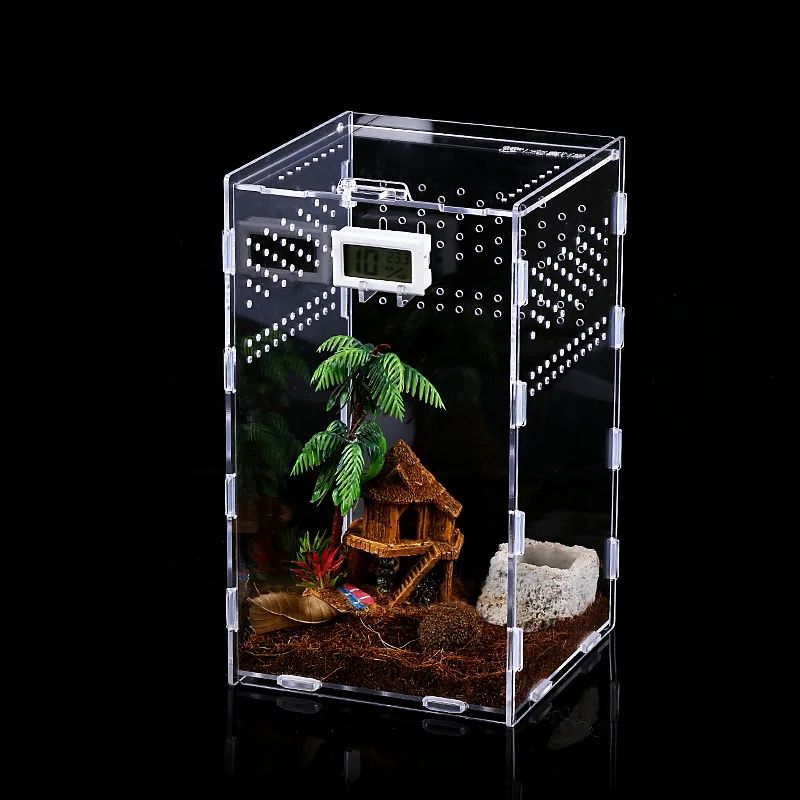
Reptile Acrylic Transparent Terrarium Habitat Breeding Box
Reptiles Cage Nano Arboreal Tarantula Enclosure Bearded Dragon
is an excellent option, offering customizable features and robust
construction. You can check out this product here.
Nesting Materials
Nesting materials are crucial for a comfortable breeding environment.
Depending on the species, you might need to provide different types of
substrates. For instance, bearded dragons prefer sandy nesting areas,
while geckos thrive in moist, soil-like substrates. Make sure the
materials are clean and free from harmful chemicals.
Ventilation and
Accessibility
Proper ventilation is essential to prevent mold growth and ensure a
healthy environment. Your breeding box should have adequate air holes or
mesh panels to facilitate airflow. Additionally, easy accessibility for
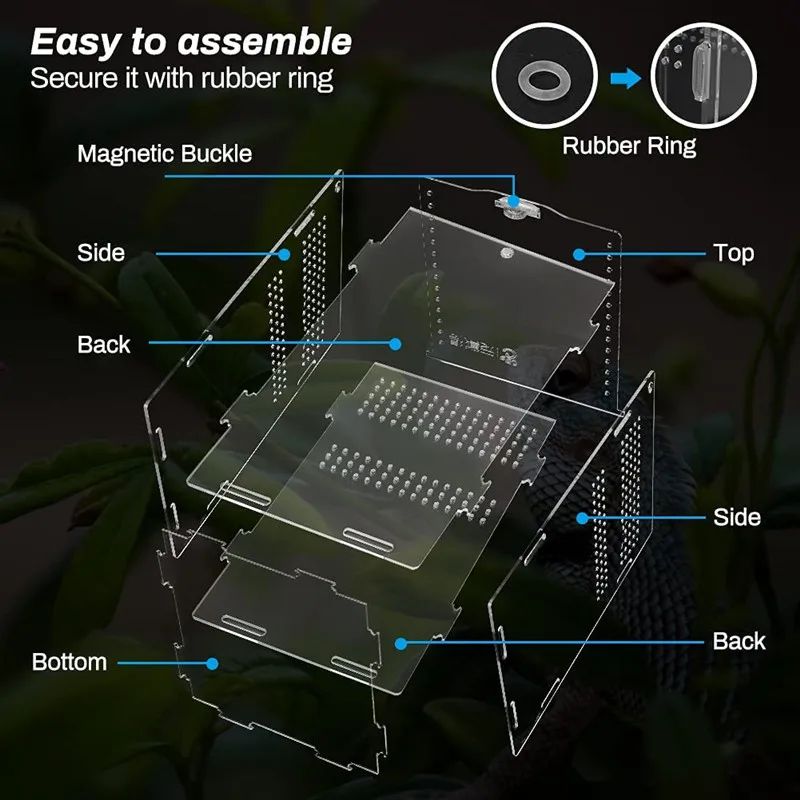
cleaning and feeding is crucial. The removable top panel of the
Reptile Acrylic Transparent Terrarium makes maintenance
a breeze, ensuring your pets have a clean and safe habitat.
With your breeding box set up, it’s time to design the overall
habitat, which we’ll cover next.
Designing the Perfect
Reptile Habitat
Creating an engaging and functional habitat goes beyond just setting
up a breeding box. Let’s explore how to design the perfect reptile
habitat.
Substrate Choices
The substrate is the foundation of your reptile’s habitat. Options
range from sand and soil to more specialized substrates like coconut
fiber or reptile carpet. Each has its pros and cons. For example, sand
is great for desert species but can cause impaction if ingested. Coconut
fiber retains moisture well, making it ideal for humid environments.
Choose a substrate that aligns with your reptile’s natural habitat and
breeding needs.
Adding Plants and
Decorations
Plants and decorations not only make the habitat more aesthetically
pleasing but also provide essential hiding spots and climbing
opportunities. Live plants can help maintain humidity levels and improve
air quality, while artificial plants offer a low-maintenance
alternative. Decorations like rocks, branches, and caves create a more
naturalistic environment, promoting natural behaviors and reducing
stress.
Lighting and Heating
Proper lighting and heating are crucial for your reptile’s health and
breeding success. UVB lighting is essential for species that require it
for calcium metabolism, such as bearded dragons. Heat sources should be
placed to create a thermal gradient, allowing your reptile to regulate
its body temperature. The Reptile Acrylic Transparent
Terrarium offers ample space to set up these essential elements
correctly.
With your habitat designed, let’s talk about maintaining it, which is
equally important for your reptile’s well-being.
Maintaining a Healthy
Reptile House
A well-maintained habitat is vital for your reptile’s health and
breeding success. Here’s how to keep everything in top shape.
Regular Cleaning and
Maintenance
Regular cleaning is essential to prevent the buildup of harmful
bacteria and parasites. Remove waste daily and conduct a thorough
cleaning of the enclosure at least once a month. The removable top panel
of the Reptile Acrylic Transparent Terrarium makes this
task straightforward, allowing you to access all areas of the cage
efficiently.
Monitoring Health
Regular health checks are crucial. Look for signs of a healthy
reptile, such as clear eyes, clean skin, and active behavior. Any
changes in appetite, weight, or behavior could indicate health issues
that need immediate attention.
Troubleshooting Common
Issues
Common issues like mold, mites, or respiratory infections can arise.
Keeping the habitat clean and monitoring temperature and humidity levels
can prevent most problems. If you encounter persistent issues, consult a
reptile veterinarian for advice.
Maintaining a healthy environment ensures your reptiles are happy and
thriving, ready for breeding success. Now, let’s wrap things up.
Conclusion
Creating an optimal breeding environment for your reptiles enhances
their health and breeding success. From choosing the right enclosure to
maintaining the perfect habitat, every detail counts. Consider the
Reptile Acrylic Transparent Terrarium Habitat Breeding Box
Reptiles Cage Nano Arboreal Tarantula Enclosure Bearded Dragon
for a versatile and customizable solution to meet your reptile’s needs.
Check out this product here.
Call-to-Action
Apply these tips to optimize your reptile’s breeding environment and
check out our recommended product for creating the perfect habitat.
Don’t forget to leave a comment with your experiences or share this post
with fellow reptile enthusiasts!
FAQ
Is there money in breeding
reptiles?
Yes, there is potential to make money in breeding reptiles. The
average annual pay for a reptile breeder in the United States is
approximately $69,416. This translates to about $33.37 per hour, $1,334
per week, or $5,784 per month. However, profitability can vary based on
factors like species, market demand, and breeding success rates.
How do you sterilize a
reptile cage?
To sterilize a reptile cage, start by cleaning it with hot water and
dish soap. Scrub thoroughly to remove any debris. After rinsing, you can
sanitize the enclosure and décor with a 10% bleach solution. Make sure
to rinse everything with hot water again and allow it to dry completely
before placing your reptile back in the cage. Regular cleaning helps
prevent the buildup of harmful bacteria and parasites.
What is the ideal
enclosure for reptiles?
The ideal enclosure for reptiles depends on the species and their
specific needs. Generally, enclosures made from wood are popular due to
their superior insulation compared to glass or plastic. These enclosures
can include glass or acrylic windows for better viewing. A well-designed
terrarium should simulate the reptile’s natural habitat closely,
providing proper lighting, heating, and ventilation to ensure a healthy
environment.
Do reptiles need a cage?
Yes, reptiles need a cage or enclosure to ensure their safety and
well-being. While baby lizards might be fine in smaller cages, larger
reptiles often require more spacious habitats. Some reptile owners even
dedicate entire rooms to their pets. However, free-roaming is not
advisable unless under close supervision, as it can be hazardous for
both the reptile and other household members.
