
The Future of Cross-Border E-commerce in Light of US-China Tariffs
Upload time :May 27, 2025
Shares
Reads
- Artificial Intelligence (AI) helps businesses optimize logistics operations by developing demand forecasts and improving cargo route management as well as reducing delay risks.
- The use of mobile phones improves mobile commerce because they provide consumers convenient access to shop between borders.
- Firms use artificial intelligence platforms to optimize their cross-border shipping operations and order tracking processes as well as return management and inventory forecasting tools to boost operational performance.
- The sellers are pursuing alternate markets such as Southeast Asia and Latin America and Russia to redirect their business operations.
- An analysis of Ozon Global platform data in Russia shows Chinese merchants have shifted their operations toward the Russian market where orders come from China at an 80% rate.
- Sellers achieve market adaptation by opening local operations while customizing their products to meet regional market demands to reach new consumer bases and reduce U.S. tariff effects sensitivity.
The American market has observed a major growth in cross-border e-commerce with DHgate positioning itself as one of the leading shopping apps within the United States. During April 2025, the growth of DHgate can be attributed to TikTok videos that promote low-priced luxury items which attract price-sensitive American shoppers.
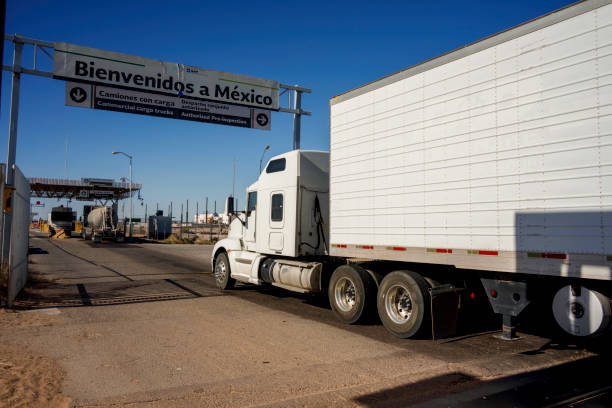
This escalation of international e-shopping activity corresponds with the increasing trade disputes between the United States and China. April 2025 started when the United States announced border taxes of 34% on various Chinese products which led China to place restrictions on American products. The measures have damaged standard supply chains and developed new expenses in both business operations and consumer purchasing processes.
The discussion examines the transformation of cross-border e-commerce shaped by U.S.-China tariffs together with future industry trends as well as the strategic position of DHgate in managing this changing international market.
All About Cross-Border E-commerce
E-commerce across national borders entails the online business transactions of products as well as services between companies and buyers with different country affiliations. Users participating in cross-border e-commerce can market their products abroad without maintaining physical operations outside their borders. The online trade process includes different transaction types among B2B and B2C and C2C formats that occur through digital channels.
The cross-border e-commerce market expanded significantly worldwide throughout the last few years. Statistics show that the market held a value of $785 billion in 2021 and analysts expect it to grow to $13.57 trillion by 2032 . The market expansion results from various forces including rising internet connectivity rates and smartphone technology adoption together with consumer willingness to shop across borders online. Global manufacturing and retail organizations maintain cross-border online sales operations which achieved 56% market penetration in 2023 because of their essential role in world commerce.
DHgate stands out as one of the main platforms enabling international trade operations among various business groups which began operations in 2004 when Diane Wang established the Chinese online marketplace which links foreign buyers directly with Chinese manufacturers. Since its founding DHgate started by catering to B2B transactions but it later added individual consumer services to its operations. The Chinese e-commerce platform DHgate operated with 77 million registered buyers and 2.6 million sellers worldwide during the late year of 2023. The platform provides a wide selection of products including electronics and fashion items which often sell at economical rates. Popular demand for Dhgate has increased predominantly in the United States because social media shares popularized the platform while U.S. consumers preferred inexpensive Chinese products due to tariff requirements.
International trade now depends heavily on cross-border e-commerce because it provides companies and shoppers with worldwide market opportunities.
The Impact of US-China Tariffs on Cross-Border E-commerce
International trade relationships between the United States and China have undergone substantial changes due to increasing tensions between the two nations that affect cross-border e-commerce operations.
Overview of Tariffs
The U.S. government launched a massive 145% tariff policy against Chinese imports which initiated a severe turn in the trade confrontation in April 2025. The de minimis exemption vanished as the U.S. made this shift along with other substantial changes. Starting on May 2, 2025 the de minimis exemption became invalid thus millions of low-cost packages including Chinese e-commerce items face substantial customs duties. U.S. officials introduced this new policy intended to control cheap foreign imports which they maintain squelch American businesses and enable counterfeited products to enter the market.
Effects on E-commerce
Workplace supply taxes resulting from these tariffs have created higher purchasing expenses for customers and substantial operational obstacles for e-commerce operators. Shein and Temu among other companies dependent on de minimis regulation to extend their cost-effective offerings plan to increase prices because of new duty costs. These operational changes endanger the price affordability that initially drove numerous U.S. shoppers to these platforms. When facing the new customs regulations DHL along with other logistics providers needed to suspend specific international delivery routes to the U.S. market. The new regulatory measures create delivery delays as well as higher operational expenses for e-commerce companies.
Response from Chinese Sellers
The upward shift in tariffs alongside falling American market demand prompts Chinese sellers to modify their business strategies. Various Chinese vendors now target their unused inventory for U.S. market with domestic consumers through local e-commerce sites and social media networks. Through these measures they both lower their financial losses and exploit increased Chinese customer support for domestic products. The main manufacturing companies are currently investigating Southeast Asia and Latin American markets as alternatives to build a more diverse and less U.S.-centered consumer base.
The substantial influence which tariff policies hold on cross-border e-commerce requires businesses to readjust their strategies in global markets that continue to grow complex.
DHgate's Role in Navigating Tariff Challenges
Cross-border e-commerce enables sales between countries yet remains difficult because of growing U.S.-China trade struggles which produce major issues for purchasers and vendors. DHgate uses strategic changes to tackle the complex challenges which enhance the process of international commerce through their Chinese e-commerce platform.
Platform Overview
Since its launch in 2004 by founder Diane Wang the company has developed into a major B2B and B2C cross-border e-commerce marketplace in China. Beijing is the headquarters for DHgate while the platform provides a connection between small and medium-sized enterprises (SMEs) and global buyers for an extensive selection of products including electronics and apparel. DHgate international trade has developed into a critical organization due to its wide range of 2.5 million supplier members who operate in 225 countries and regions across the platform.

Adaptation Strategies
The US decision to tax Chinese goods by 145% and remove the de minimis benefit caused DHgate to improve its logistics system for protecting cross-border internet commerce. By establishing 14 overseas warehouses across the world DHgate provides its customers with both speedier deliveries and reduced costs to their destinations throughout key international markets including the USA.
Buyer Protection and Policies
International trade maintains trust through robust protection policies that DHgate has implemented for buyers. The escrow service of the platform keeps payments safe until buyers verify delivery of their purchased items which protects against fraudulent transactions. Also, the platform offers dispute resolution services that support buyers through reviewing seller ratings and product reviews to build informed purchasing decisions.
Inshort, DHgate maintains its dedication to sellers and buyers in the evolving cross-border e-commerce market through continuous service and infrastructure refinement as trade policies evolve.
Future Trends in Cross-Border E-commerce Amid Tariff Changes
The U.S.-China trade dynamics have created substantial changes in the field of cross-border e-commerce. A break down of current trends exists as follows:
Shift in Consumer Behavior
The 145% Chinese import tariff policy together with the de minimis exemption elimination forced manufacturers to raise their prices on traditionally Chinese-sourced goods. U.S. consumers now pursue cost-effective solutions due to rising prices of Chinese imports. Secondhand and resale platforms including Poshmark, Mercari, and TheRealReal have gained increasingly popular use from customers. Both Millennials and Gen Z customers lead this purchasing trend because they want budget-friendly deals and care about environmental issues. This pattern emerges as Chinese e-commerce platforms such as DHgate, notice a sharp increase in U.S. user numbers who seek competitively priced goods directly from suppliers.
Technological Advancements
International trade complexity becomes manageable through e-commerce platforms that implement advanced technologies to succeed.
Thus, modern technologies have become essential tools for preserving the competitiveness of cross-border e-commerce despite growing trade complexities.
Diversification of Markets
Chinese sellers face rising U.S. barriers through increased tariffs and regulations so they shift their sales strategies toward potential new markets to protect their business operations.
This strategy allows sellers to distribute their business beyond the U.S. while creating opportunities to penetrate new markets elsewhere.
In summary, the cross-border e-commerce industry adapts to U.S.-China tariff difficulties through consumer market adjustments together with innovative technologies along with new distribution channels. At the forefront of modernized international trade stands DHgate, which uses advanced technology alongside selective market placement methods to manage complex market conditions.

Strategies for Businesses to Thrive in the Evolving Global Marketplace
The ongoing transformation of global economic dynamics by trade tensions together with tariffs requires companies to implement proactivity with global thinking and flexibility to both survive and achieve success. A set of three specific approaches exists to successfully tackle the evolving cross-border e-commerce market.
Supply Chain Optimization
The U.S.-China tariff increases together with logistics disruptions force businesses to move away from using a single source or regional base. Diversifying suppliers is now essential. Many businesses abandon their past reliance on strict Chinese production by adopting "China+1" models that add new supply points throughout Vietnam and Mexico as well as India. Companies who follow the nearshoring or regionalization approach accomplish three benefits: risk reduction together with shipping speed improvements and protection from U.S. tariffs.
Moreover application of AI-powered digital supply chain technologies and real-time analysis helps organizations find low-cost delivery paths and track inventory details for improved global crisis response.
Leveraging E-commerce Platforms Like DHgate
Sellers looking to expand globally through DHgate enjoy access to a pre-built operational framework using minimal initial funding. Small and medium businesses find value in accessing millions of international buyers through DHgate as well as accessing DHLink (logistics) together with escrow payment systems and overseas warehouses. The platform features enable companies to deliver orders faster and cheaper — important benefits given the risk tariffs present to market prices.
Additionally, the Stock Save Sale section on DHgate presents low-priced stock that helps U.S.-based resellers and bulk buyers stock their inventory affordably during a period of high import expenses.
Policy Awareness and Compliance
Businesses must remain updated on shifting regulations since the de minimis exemption has been removed. Knowledge about customs laws alongside documentation requirements and tariff updates represents not only a standard practice but the minimum requirement needed to prevent fines alongside shipping delays. Simplified compliance can be achieved by using trade compliance software as well as customs brokers together with regular updates from trade organizations. Seller assistance from DHgate includes detailed buyer protection resources along with helpful tools that enable suppliers to handle international trade standards properly.
Businesses can create future prospects from present-day trade complications by implementing smart supply chain strategies and using the global platform of DHgate while remaining compliant with international rules.

Conclusion
Cross-border e-commerce continues to transform as an ongoing rapid process. The evolution of retail trends fueled rising consumer demand which positioned DHgate as a prominent platform and motivated sellers to expand their markets outside of the United States while technological solutions aid both customers and suppliers to maintain their positions. Business success in this market requires supply chain adaptation combined with trust-based platform usage and trade regulation monitoring on platforms such as DHgate.
Future success demands that business organizations adopt the imperative need for flexibility. The worldwide market evolution requires adaptable businesses that adopt speed-based strategies alongside international perspective thinking for success. Consumers should adopt wise buying tactics that bring them to the most suitable shopping locations. The situation requires businesses to innovate their approach while localizing their operations and seeking alternative market access channels.
Change is here — and it’s just getting started!